Effective Content Marketing Strategies for Businesses in 2025


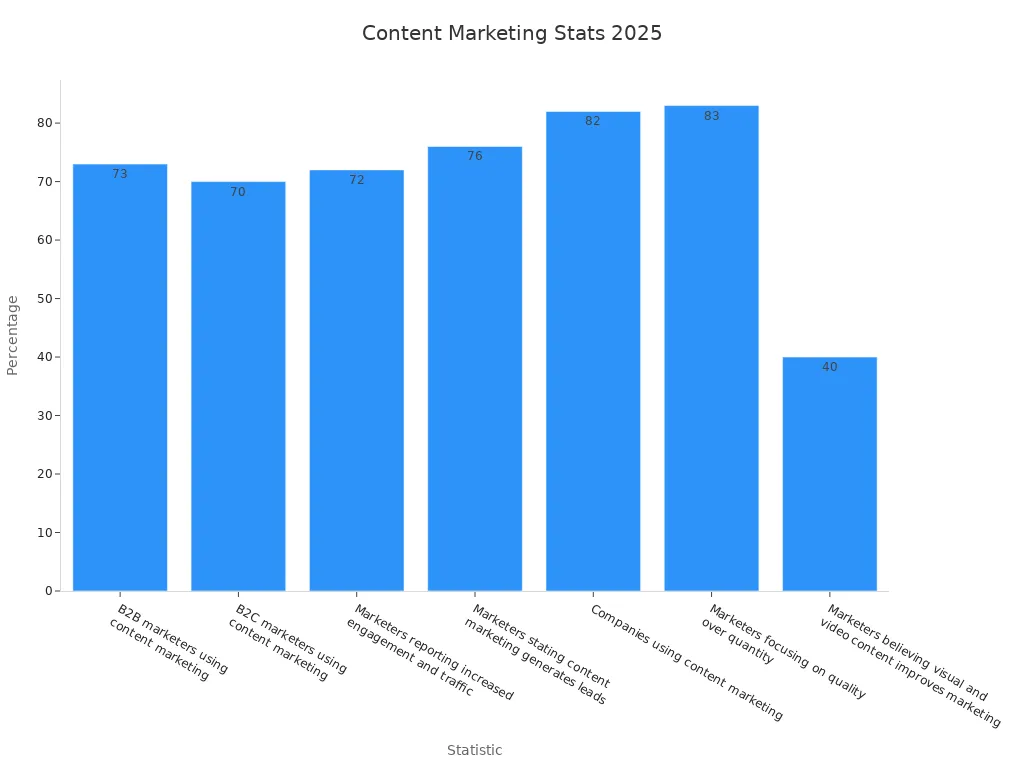
Content marketing is one of the most effective marketing strategies for businesses in 2025. It helps brands communicate with people and gain their trust. Studies show that 82% of companies are now utilizing content marketing. Approximately 76% report that it aids in acquiring new customers. Tools like AI have transformed how these effective marketing strategies work. Around 87% of tech marketers currently employ AI tools. By addressing customer problems, businesses can foster loyalty and achieve success.
Key Takeaways
Content marketing helps people trust and stay loyal to brands. Businesses should make useful content to connect with their customers.
AI and automation tools save time and cut costs in marketing. These tools let marketers plan better while doing boring tasks for them.
Updating and reusing old content can boost interest a lot. Businesses should check their top posts to keep them fresh and useful.
Why Content Marketing Matters in 2025
Benefits of content marketing for businesses
Content marketing helps businesses connect with their audience easily. It builds trust by sharing useful and reliable information. For example, 94% of marketers think thought leadership improves brand image. This method creates loyalty and boosts interaction. About 72% of marketers say it increases website visits and engagement. Also, 76% believe it helps get new customers.
One big benefit is its lasting impact. Evergreen content stays useful for a long time. It keeps bringing in readers even after being published. This makes it a smart and affordable choice for businesses wanting better returns.
Here’s a quick summary of key facts:
Statistic | Value |
|---|---|
Marketers who think thought leadership improves brand image | 94% |
Marketers who say content requests lead to email opens | 73% |
Marketers who find good subject lines important | 62% |
Examples of success stories (e.g., Sugar Geek Show, iFixit)
Real examples show how content marketing works well for businesses. Sugar Geek Show is one example. They share recipes and tutorials that people love. By meeting customer needs, they gained loyal fans and grew their income.
Another example is iFixit. They offer free guides to fix electronics. This brings millions of visitors and makes them trusted experts in repairs. These stories prove that solving problems with content builds trust and gets results.
Content marketing vs. paid advertising: A cost-effective approach
Content marketing costs less than paid ads and lasts longer. Paid ads need a lot of money upfront and have high costs per customer. Content marketing starts cheaper and keeps people interested over time.
Here’s a comparison:
Strategy | Cost-Effectiveness |
|---|---|
Advertising | Needs big upfront spending; quick results but costly; high cost-per-customer. |
Content Marketing | Starts cheaper; long-term value with lower costs; better ROI over time. |
Content marketing works well on many platforms, making it worth the investment. Over time, it gives better returns, making it a top strategy for 2025.
Key Trends Shaping Content Marketing in 2025
The rise of customer-centric content
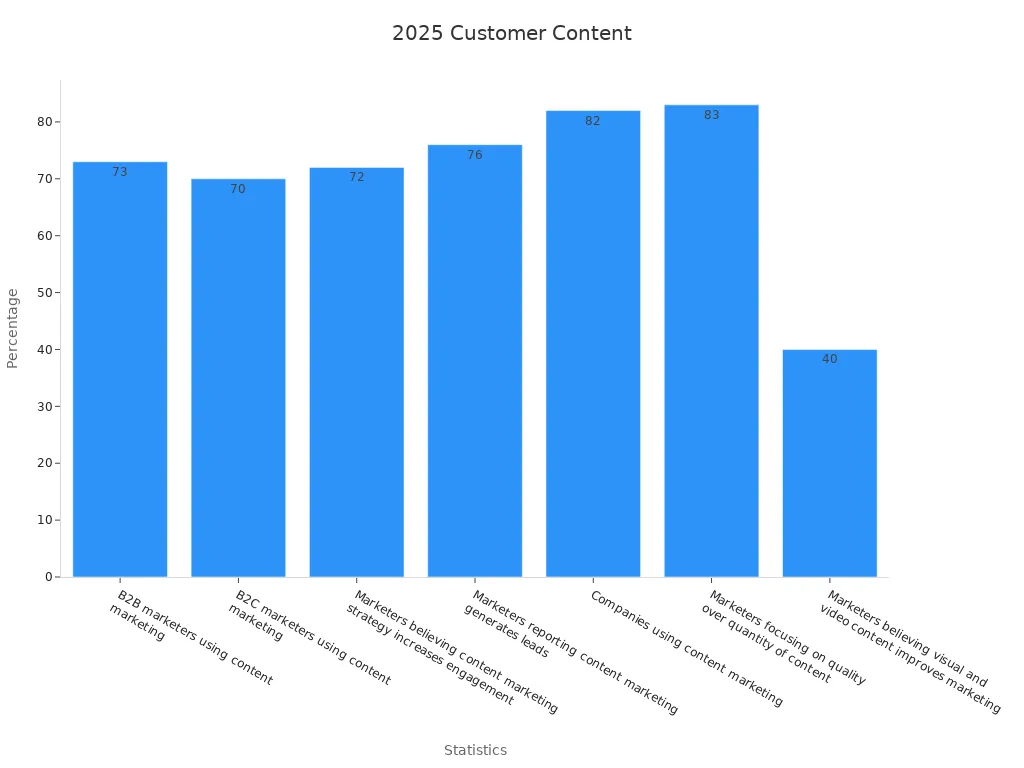
In 2025, businesses focus on customer-centric content to succeed. They create material that matches what people want and need. This change shows how important personalized experiences are now. For example, 83% of marketers care more about quality than quantity. They want their content to be helpful and valuable. Also, 76% of marketers say content marketing helps bring in new customers.
Statistic | Percentage |
|---|---|
73% | |
B2C marketers using content marketing | 70% |
Marketers believing content marketing strategy increases engagement | 72% |
Marketers reporting content marketing generates leads | 76% |
Companies using content marketing | 82% |
Marketers focusing on quality over quantity of content | 83% |
Increased focus on storytelling to build emotional connections
Storytelling is now a strong way to connect with people. It helps brands make loyal customers by sharing memorable stories. Success is measured by how much people know, like, and feel about the brand. Tools like Google Analytics show how well stories work. Sentiment analysis tools also help track customer feelings about the stories.
Metric Type | Description | Measurement Tools |
|---|---|---|
Brand Awareness | Google Analytics, social media monitoring, brand tracking surveys. | |
Engagement | Indicates how well the story resonates with the audience. | Social media analytics, content performance tools, website analytics. |
Conversions | Direct indicator of effectiveness in driving desired actions. | Google Analytics, CRM systems, eCommerce platforms. |
Brand Loyalty | Fosters emotional connections leading to repeat purchases and referrals. | CRM systems, customer satisfaction surveys, loyalty programs. |
Emotional Impact | Gauges the emotional response of the audience to the storytelling. | Sentiment analysis tools, social listening platforms, customer feedback. |
The growing importance of content repurposing
Reusing old content is now a smart way to stay relevant. Businesses update their best posts to reach more people. This can increase engagement by up to 76%. Also, 46% of marketers think repurposing is better than making new content. It saves time and helps businesses grow steadily.
Evidence Type | Description |
|---|---|
Engagement Increase | Up to a 76% increase in engagement rates from revitalizing older posts. |
Marketer Preference | 46% of marketers find repurposing more effective than creating new content. |
Forty-two percent of businesses saw more value by updating old content.
Regular updates keep posts fresh and interesting.
Leveraging AI and automation tools for efficiency
AI and automation tools make content marketing faster and cheaper. Generative AI can cut email writing time in half. Automation also shortens lead follow-up times by 33%. These tools let marketers focus on planning while machines handle repetitive tasks.
Time Savings: Generative AI cuts email writing time by 50%, saving hours.
Process Cycle Time: Automation reduces lead follow-up time by 33%, speeding up growth.
Cost Reductions: Automating tasks like data collection saves money and effort.
Step-by-Step Guide to Building an Effective Content Marketing Strategy
Build a strong base (website, branding, analytics)
A good base is key for content marketing success. Start by making sure your website is easy to use and works well. Keep branding the same everywhere to build trust and recognition. Use tools like Google Analytics to check how things are going and find ways to improve. Studies show that using good data and focusing on users makes marketing more effective.
Skill | What It Does |
|---|---|
Data Basics | Goals and good data are the main support. |
User-Focused Approach | A clear plan and understanding of user needs. |
Resources | Enough tools and people to keep things running smoothly. |
Tools | Use different tools for planning and tracking progress. |
Impact & Support | Tools and methods make marketing more useful and trusted. |
Do market research (talk to customers, surveys, check competitors)
Market research is super important for a good strategy. Talk to customers and ask them questions to learn what they like. Look at competitors to see what they’re missing and improve your plan. For example, tools like the U.S. Census Bureau give helpful info about people. This helps you make content that connects with the right audience.
Area | Purpose | Source |
|---|---|---|
Business stats | Learn about industries. | |
Customer info | Understand potential buyers. | |
Population details | Target specific groups. |
Create SMART goals for clear results
SMART goals help you track your progress. Make goals that are specific, measurable, achievable, relevant, and time-based. For example, aim to grow website traffic by 25% using SEO by the end of the year. These goals keep everyone focused and working toward real results.
Step | Example SMART Goal |
|---|---|
Plan | Review website, SEO, and ads by the first quarter. |
Reach | Boost search traffic by 25% with SEO by year-end. |
Act | Increase time spent on the site by 15% by the third quarter. |
Convert | Raise conversion rates by 10% by improving buttons and pages by year-end. |
Engage | Keep 10% more customers with loyalty programs by the third quarter. |
Decide your message and stay consistent
Clear messages and steady branding help you stand out. For example, VideoAmp grew their leads by 850% by updating their website and brand story. Being consistent builds trust and helps people understand what makes you special.
Bloomreach’s Ad Plan: Grew brand awareness by 10% with targeted ads.
VideoAmp’s Website Update: Increased leads by 850% with clear branding.
Write down your strategy for better teamwork
Writing your strategy helps everyone stay on the same page. Companies with written plans often do better. For instance, 60% of top marketers have a written plan, compared to only 21% of less successful ones. This reduces confusion and makes work smoother.
Written plans help get bigger budgets.
Clear plans improve teamwork.
Tools and Resources for Success
Market research tools (e.g., Google Forms, SurveyMonkey, Semrush)
Market research tools help businesses learn about their audience. Tools like Google Forms and SurveyMonkey collect feedback easily. SurveyMonkey lets companies check what people like using simple reports. Semrush shows how competitors use SEO to get more visitors. It compares websites and finds ways to improve traffic.
Here are some useful features of these tools:
Real-time data access helps make quick decisions.
Advanced methods like MaxDiff give better insights.
Panel choice flexibility improves the quality of surveys.
AI features make data analysis faster and easier.
Using these tools helps businesses plan smarter and earn more money.
Content creation tools (e.g., AI writing tools, design tools)
Content creation tools make creating content faster and easier. AI writing tools save time by writing good content quickly. Design tools make content look better and attract more people. These tools also keep the style the same everywhere, which is important for brands.
Benefit | Description |
|---|---|
AI tools create content fast, so marketers can plan better. | |
Enhanced Quality | Good content keeps people interested and engaged. |
Consistency | Keeps the same tone and style in all content. |
Cost Savings | Saves money by automating tasks while keeping quality high. |
Using these tools well can improve SEO and increase earnings.
Analytics and tracking tools (e.g., Google Analytics, Position Tracking)
Analytics tools track how well content works and help improve plans. For example, Amazon used analytics to study customer habits. This led to 25% more sales and 18% more money from ads. Businesses can track things like ROI and engagement to make better decisions.
Steps to use analytics tools:
Set goals in Google Analytics 4 to track actions like sales.
Check page views and bounce rates to see content performance.
Look at social media stats to find the best platforms for traffic.
Studying this data helps businesses improve SEO and grow faster.
Project management and social media management tools
Managing projects is easier with the right tools. Platforms like Asana and Trello help teams stay organized. Asana has calendars and connects with other tools. Trello uses boards to show tasks visually. Both tools help teams finish work on time.
Tool | Description | Features | Price |
|---|---|---|---|
Asana | A popular tool for managing content projects. | Calendars, different project views, and tool integrations. | Free to $24.99/month/user |
Trello | Another tool that uses a visual task system. | Boards, task assignments, and team collaboration. | Free to $20/month/user |
These tools make workflows smoother, improve SEO plans, and boost profits.
Common Pitfalls to Avoid
Starting without a strong plan
Jumping into content creation without planning can waste time. Many businesses fail because they skip key steps. For example, only 44% of marketers write down their strategies. Without planning, it’s hard to match content with goals. Some also miss search trends or lack a clear process. This leads to poor quality and missed opportunities. Without a good base, it’s tough to grow or gain customers.
To fix this, start with a solid plan. Write your strategy, know your audience, and link content to your goals. These steps help you succeed in the long run.
Skipping a written strategy
A written plan is like a map for your marketing. Without it, businesses often face unclear goals and poor targeting. For instance, 42% of B2B marketers with weak plans struggle with unclear objectives. Without writing things down, it’s easy to lose focus and pick the wrong channels.
Writing your plan gives each piece of content a purpose. It helps track progress, keep customers, and meet business goals. This clarity improves your marketing results.
Making boring, generic content
Generic content doesn’t grab attention in today’s market. About 43% of marketers say they struggle to stand out. This hurts trust and lowers SEO rankings. Small businesses often lose to bigger ones with more resources. Only 24% of companies say their strategies work well, often due to boring content.
To stand out, make content that fits your audience’s needs. Focus on quality and relevance. This keeps people interested and helps you gain and keep customers.
Ignoring data to improve strategies
Not using data to adjust your plan can hurt results. Some companies see high bounce rates and fewer sales because they skip analytics. For example, 18% of businesses report bad outcomes from ignoring data. But one company boosted blog time by 30% after using data insights.
Check your analytics often to see what works. Use this info to improve your plan, get more engagement, and grow revenue. Adjusting your strategy is key to long-term success.
A good content marketing plan in 2025 helps businesses stay ahead. Being flexible and improving often are important for success. Begin with small steps, check your results, and make changes as needed.
💡 Tip: Start now! Write down your plan and match it to your goals.
FAQ
How can I find my target audience?
Start by asking questions through surveys or interviews. Learn what they like, their problems, and their goals. This helps you make content they enjoy and find useful.
How often should I change my content plan?
Check your plan every three months. This keeps it updated with what your audience wants and makes your content stay useful.
Why does storytelling matter in content marketing?
Stories create feelings and connections. They help people understand and trust your brand, making them more interested in your content.